Thermal documentation
Method
Thermal documentation is planned around the record required, then captured with paired visual context so later review can locate apparent temperature patterns on the asset.
Workflow
From objective to organized record
01
Objective
Define what temperature-pattern documentation needs to support: inspection review, location context, or a repeatable record of current conditions.
02
Capture planning
Review access, sun and load conditions, emissivity and reflectivity concerns, overlap, and altitude so coverage matches the required record.
03
Thermal data collection
Capture radiometric thermal stills systematically across the asset or area, checking coverage before leaving the site.
04
RGB context
Pair thermal frames with visual imagery so apparent temperature patterns can be located on the physical asset.
05
Review and reporting
Organize thermal and RGB stills, location context, and supporting files for the people who will interpret the record.
Technology
Equipment and processing
Aerial systems, thermal sensors, and software are tools. They are selected after the documentation objective is defined.
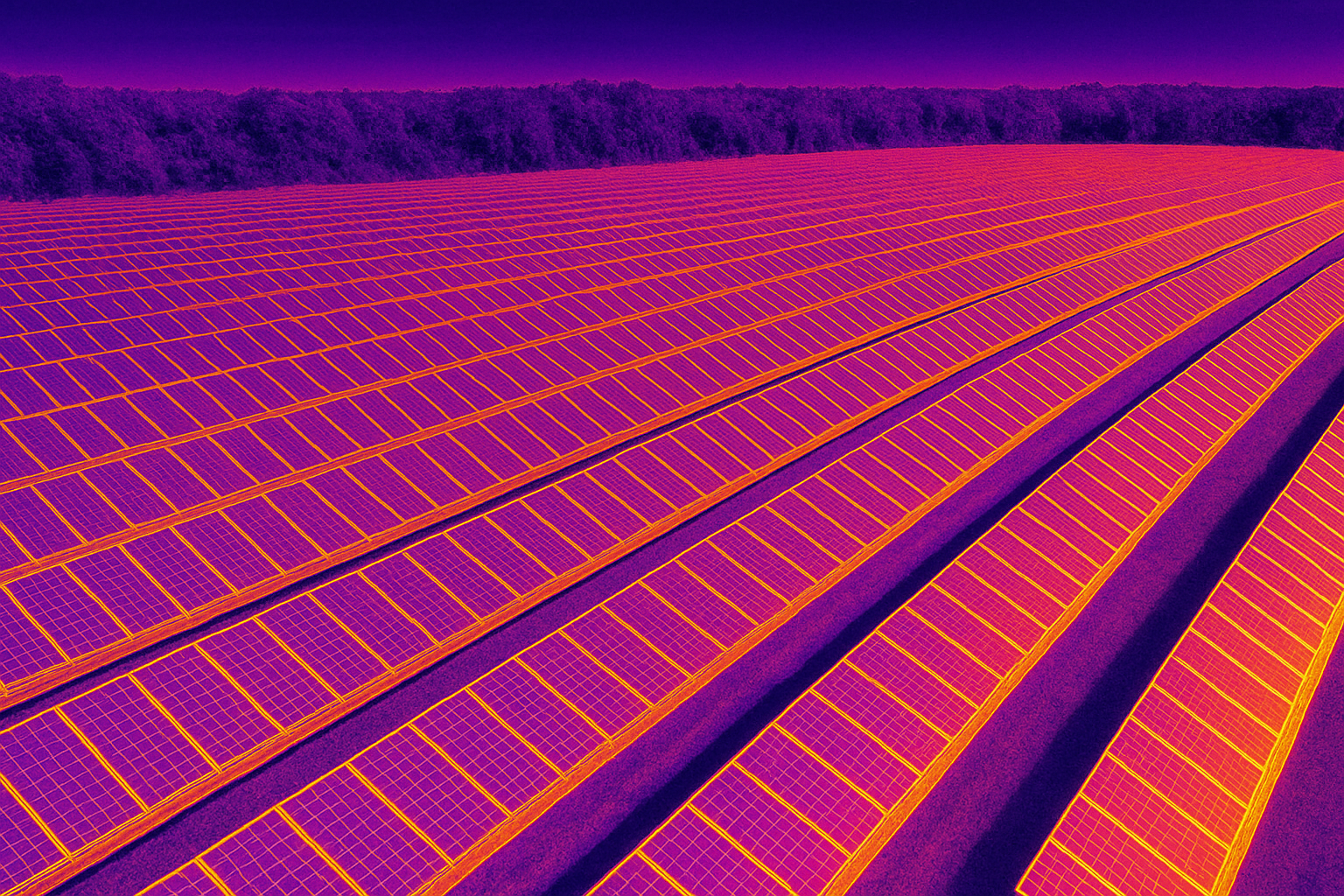
Current aerial thermal work uses a radiometric thermal sensor paired with a high-resolution RGB camera. When RTK or other positional control is used, it can improve alignment between thermal overlays and real-world location. Alignment still depends on capture conditions and the control method specified for the engagement.
For photovoltaic inspections, reporting can be organized to support review under IEC 62446-3. That standard is specific to PV thermal inspection and is not a general thermal-documentation protocol.
Thermal imaging records apparent surface-temperature differences. Interpretation remains with the appropriate qualified professional.
Need thermal documentation?
Describe the asset and the review the record needs to support.