Service 02

Mapping & Photogrammetry

Create measurable 2D and 3D site records using coordinated image capture and photogrammetric processing.

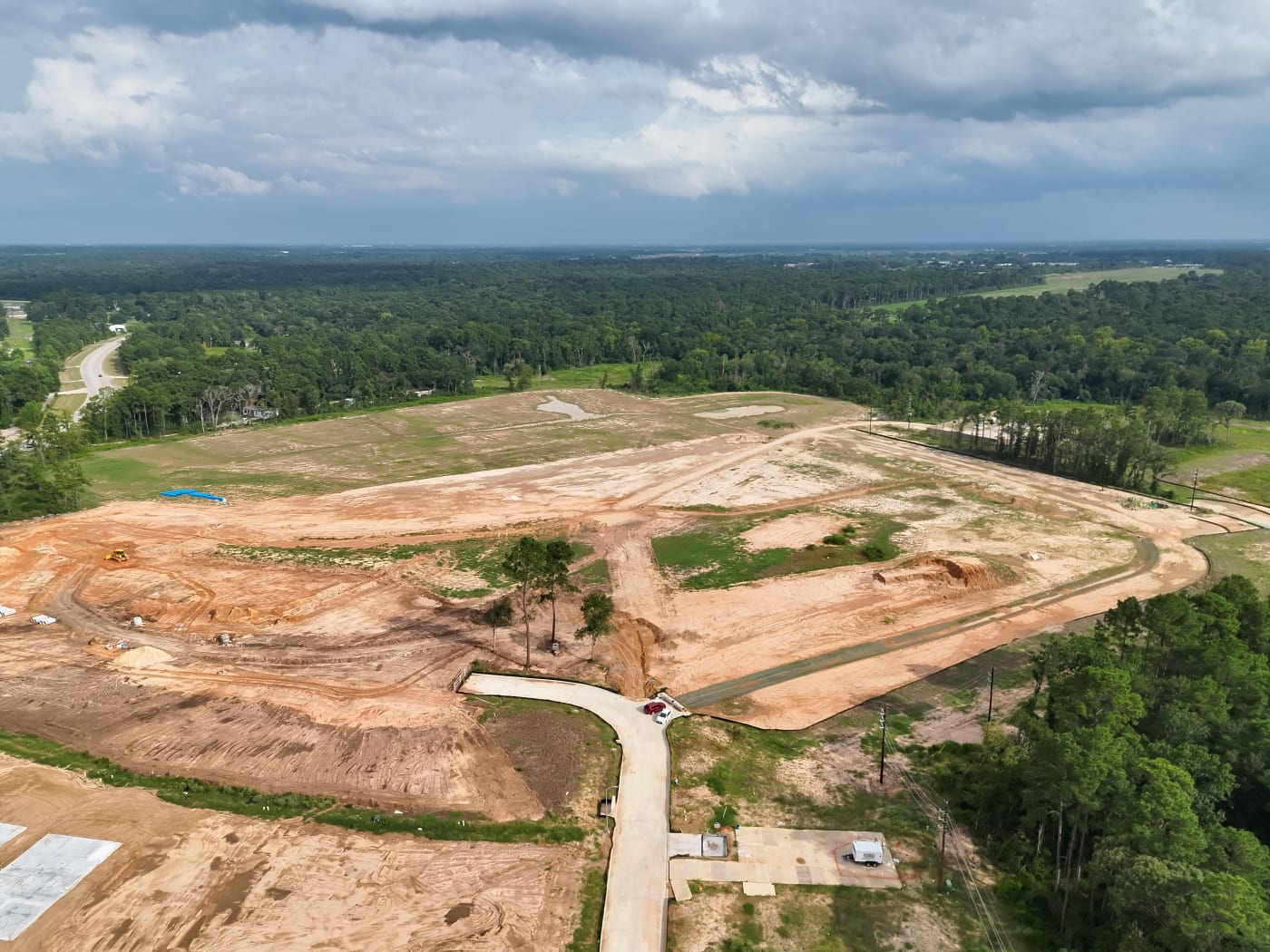
Aerial mapping of a 65-acre development site

Applications

Where mapped records are used

Mapping is selected when a site needs overview, measurement, or a repeatable spatial record over time.

  • Construction progress

    Shared spatial records of grading, utilities, pads, and access as work advances.

  • Existing conditions

    A baseline of current layout before design or construction changes the site.

  • Site mapping

    Scaled coverage of property layout, access, and surrounding context.

  • Stockpile / volumetric documentation

    Volume context derived from the processed surface when scoped.

  • Industrial sites

    Yards, plants, and operational areas where a measurable overview is useful.

  • Large properties

    Coverage that is difficult to assemble from ground photography alone.

  • Earthwork / terrain context

    Surface and elevation context for planning and later comparison.

  • Recurring project records

    Repeatable capture so later visits can be compared to an earlier state.

Deliverables

Mapped outputs

  • Orthomosaics

    Scaled aerial maps that show site layout, access, and change over time.

  • Point clouds

    Spatial datasets that support measurement, context, and further analysis.

  • 3D models

    Reconstructed site geometry for remote review and communication.

  • Volumetric data

    Cut, fill, or stockpile quantities when the capture is scoped for volume.

  • Surface / elevation outputs

    Terrain context derived from the processed model when requested.

  • High-resolution imagery

    Still coverage for conditions, staging, and visual reference.

  • Technical exports

    Agreed files for GIS, CAD, or review workflows.

Deliverables are selected according to project scope, site conditions, and documentation objectives. Technical exports such as GeoTIFF, LAS, or OBJ are provided when the processing method and engagement specify them.

Method

How photogrammetry works

Overlapping stills are captured across the site, aligned through common features, and reconstructed into measurable spatial products.

  1. 01 — Overlapping image capture. A planned set of stills covers the area with enough overlap to reconstruct geometry.
  2. 02 — Reconstruction. Processing software aligns the images and builds a dense spatial model of the captured surface.
  3. 03 — Measurable outputs. The model can be exported as orthomosaics, point clouds, meshes, or other agreed products.

Measurement quality depends on capture geometry, processing, and any control used for the engagement. It is not a universal accuracy claim.

Positioning

Photographs versus mapped records

A photograph documents one viewpoint. A mapped dataset preserves spatial relationships across an area.

Individual stills remain useful for specific observations. They do not, by themselves, reconstruct distances, layout, or how one location relates to another. Photogrammetric products exist to keep those relationships available after the site has changed.

Example mapped record

Products

What the spatial products are

An orthomosaic is a scaled aerial map. It removes the single-photo perspective so layout, access, and change can be reviewed across a site. A point cloud is the dense spatial dataset behind that view, used when measurement or further analysis needs geometry rather than an image. A 3D model is the navigable surface built from the same capture, useful when a team needs to look at form, progress, or context remotely.

Elevation and surface products describe terrain shape when the capture supports them. Volumetric outputs estimate stockpile or earthwork quantities from that surface. Recurring documentation repeats a compatible capture so a later visit can be compared with an earlier one. Construction progression is one use of that repeatability: grading, pads, utilities, and structure recorded while they are still visible.

Exports

Technical exports and control

Agreed exports such as GeoTIFF, LAS, OBJ, or a web map are provided when the processing method and the engagement specify them. The file format does not add accuracy. Control, when used, ties the model to known positions. Without it, the record can still preserve relative layout, and measurements should be treated as relative to that capture.

Photogrammetric elevation context is not a licensed topographic survey. Boundary, easement, and other legal survey products remain with a licensed surveyor. SterFlies can document the visible surface. It does not certify property lines or pay quantities.

Limits

What limits a mapped record

Vegetation, water, glass, moving equipment, and low texture can leave gaps or noise. Flight limits and active construction can block coverage. A single visit documents that visit. Work completed or covered between visits is absent unless it was captured while visible.

Those limits belong in the project record. They are the difference between a useful site document and a claim the data cannot support.

Project

Selected field documentation

An example of recurring aerial mapping. No universal accuracy claim is attached to this project.

Aerial mapping of a 65-acre development site

Mapping and progress documentation

65-Acre Site Mapping & Progress Documentation

What was documented
Recurring aerial mapping of grading, utilities, pads, and access across a 65-acre development.
Capture methods
Coordinated still capture processed into an orthomosaic and shareable web map.
Why it mattered
Give project teams a shared spatial record of site conditions as work advanced.
Deliverables
Orthomosaic and shareable web map.
View project

Need a site documented?

Tell us what needs to be captured, measured, or preserved and we can determine the appropriate documentation approach.