Why Existing Conditions Documentation Is Critical for Environmental & IH Investigations
Preserving site context before it changes—without replacing the role of the industrial hygienist.
By Jerome Sterling
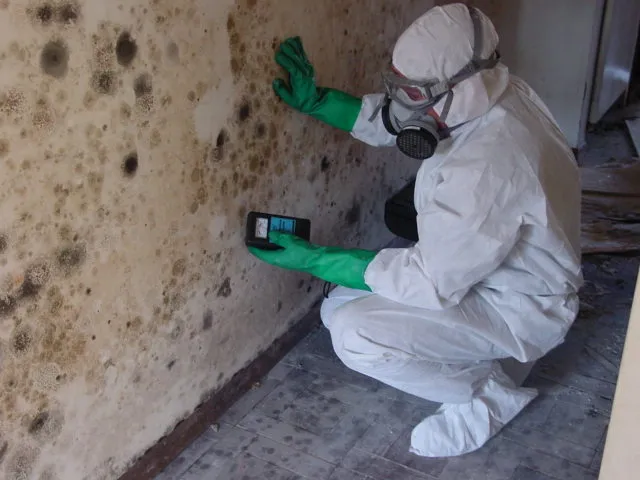
In industrial hygiene and environmental consulting, conclusions are only as strong as the conditions that can be clearly demonstrated.
Whether an investigation involves mold, asbestos, IAQ concerns, or construction-related exposure pathways, the ability to preserve site conditions at a specific point in time can be just as important as sampling results and laboratory analysis.
Yet many projects still rely heavily on written notes, handheld photographs, and memory-based reconstruction. These tools remain valuable, but they can leave gaps when conditions change, access is lost, or findings are later questioned.
This is where existing conditions documentation plays a supporting role.
The Challenge: Sites Change Faster Than Reports
Environmental investigations rarely occur in static environments. Conditions can change quickly due to:
- Remediation, demolition, or selective removal
- Temporary containment or engineering controls
- Weather events, moisture intrusion, or drying
- Occupant alterations, cleanup efforts, or repairs
Once a site changes, reconstructing “what was present at the time” becomes difficult—or impossible. Even strong reports can be challenged if visual context, spatial relationships, or surface conditions are no longer available for review.
What “Existing Conditions Documentation” Means in Practice
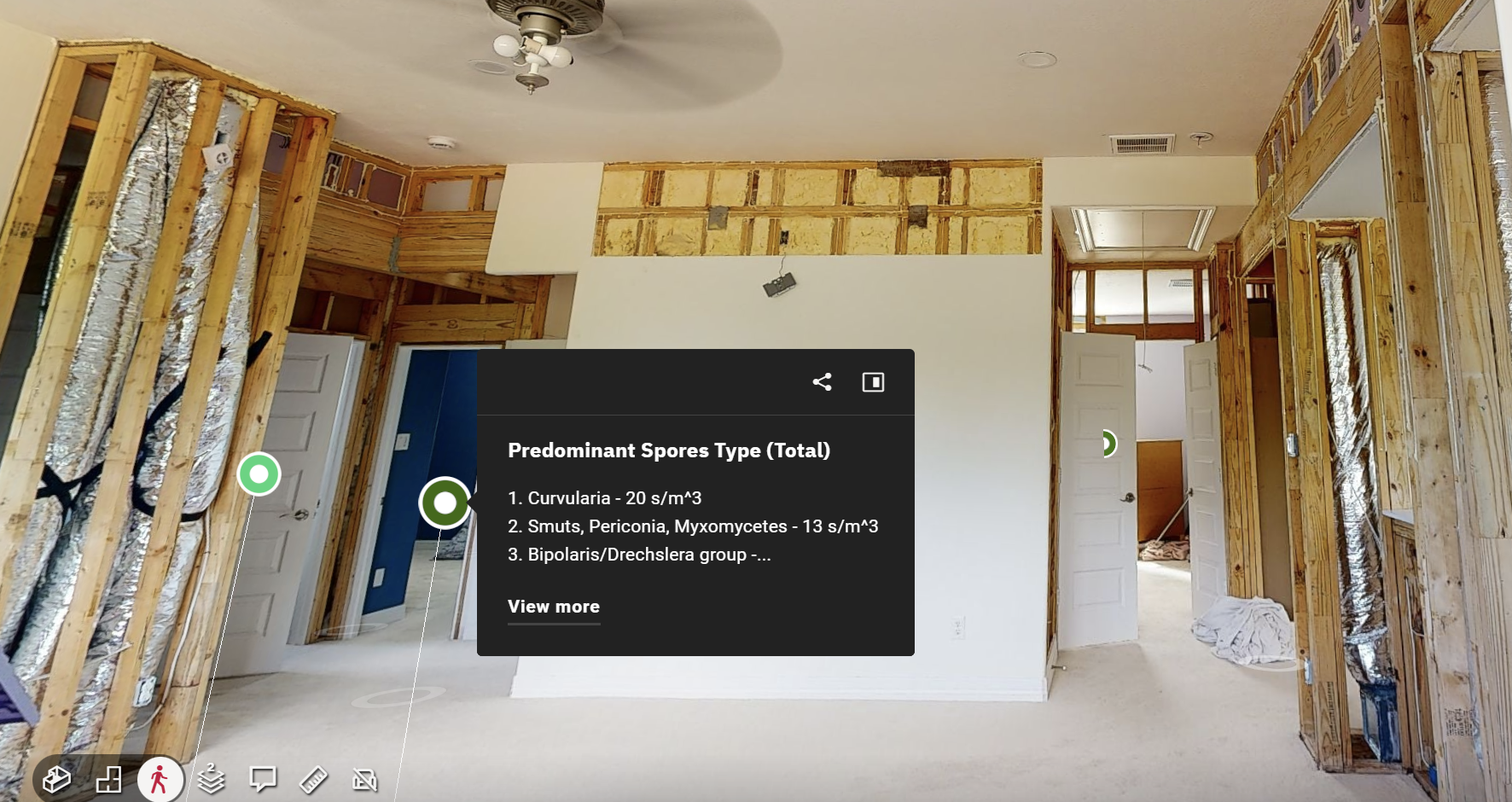
In the IH and environmental context, existing conditions documentation is not marketing media. It is objective capture of spatial reality—preserving conditions as they exist at a specific moment in time.
Depending on the project, that can include:
- High-resolution visual records of affected areas
- Spatial context showing how rooms, materials, and systems relate
- Time-stamped documentation tied to a specific site visit
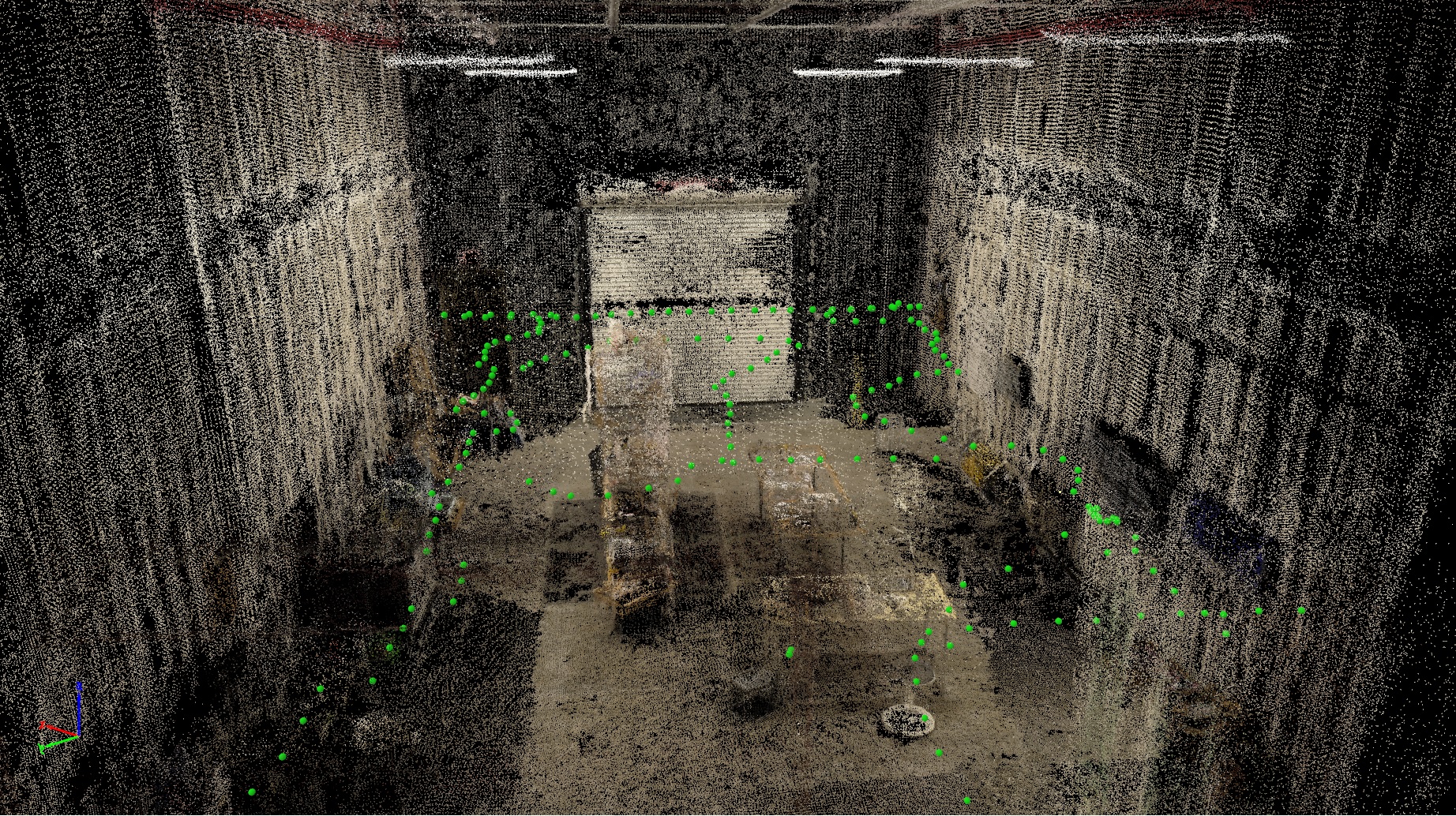
- Measurable 3D representations that can be revisited later
The goal isn’t interpretation—it’s preservation.
Why Visual Context Matters in Environmental Investigations
Environmental conditions are rarely isolated to a single surface or sample point. Mold growth, fiber migration, and air pathways are influenced by building geometry, material transitions, penetrations, and moisture sources.
A preserved visual record helps demonstrate how conditions relate to one another—not just that they exist. This becomes especially valuable when explaining findings to non-technical stakeholders or reviewing conditions months later after access is restricted.
Supporting, Not Replacing, Professional Judgment
Existing conditions documentation does not replace sampling, analysis, or professional interpretation. It acts as a reference layer that supports the work—especially when third parties need to understand site context long after conditions have changed.
In practice, that means you can revisit the environment virtually to verify spatial relationships, confirm documented conditions, and reduce ambiguity during review.
Where This Adds Value for IH & Environmental Work
Existing conditions documentation is commonly leveraged for:
- Mold and moisture investigations
- Asbestos-containing material assessments
- IAQ complaints and pathway analysis
- Pre- and post-remediation condition records
- Construction-related exposure concerns
- Dispute or claim-related documentation support
In each case, the goal is the same: preserve clarity when the site cannot be revisited in its original state.
Objectivity and Defensibility
A key strength of structured site documentation is neutrality. Unlike narrative descriptions alone, visual records can be reviewed by multiple parties and reduce reliance on memory or selective imagery.
A neutral visual record helps others review the same conditions you observed—without changing your role as the professional.
How to Integrate It Into a Real IH Workflow
Existing conditions documentation is most effective when captured early—before remediation, demolition, or repairs begin. Many teams integrate it:
- At the initial site visit
- Before invasive testing or removal
- Prior to construction, demolition, or remediation mobilization
- Before reporting, peer review, or third-party evaluation
In many cases, early documentation is never needed again. When it is needed, however, it cannot be recreated.
If you capture it early and never use it again, it was still worth having. If you need it later and don’t have it, you can’t go back.
Final Thoughts
Industrial hygiene and environmental investigations are ultimately about accuracy, clarity, and professional judgment. Existing conditions documentation doesn’t change how investigations are performed—but it strengthens how well conditions can be reviewed, communicated, and trusted over time.
Need Early Documentation Before Work Begins?
If you’re planning remediation, removal, or repair work and want a neutral visual context layer captured first, reach out and tell us what you’re working on.